
Square Feet to Cubic Feet Calculator: Find Volume From Area and Depth
Learn to use a square feet to cubic feet calculator with depth in inches or feet. Get clear formulas, coverage tables, and soil, mulch, and concrete examples.
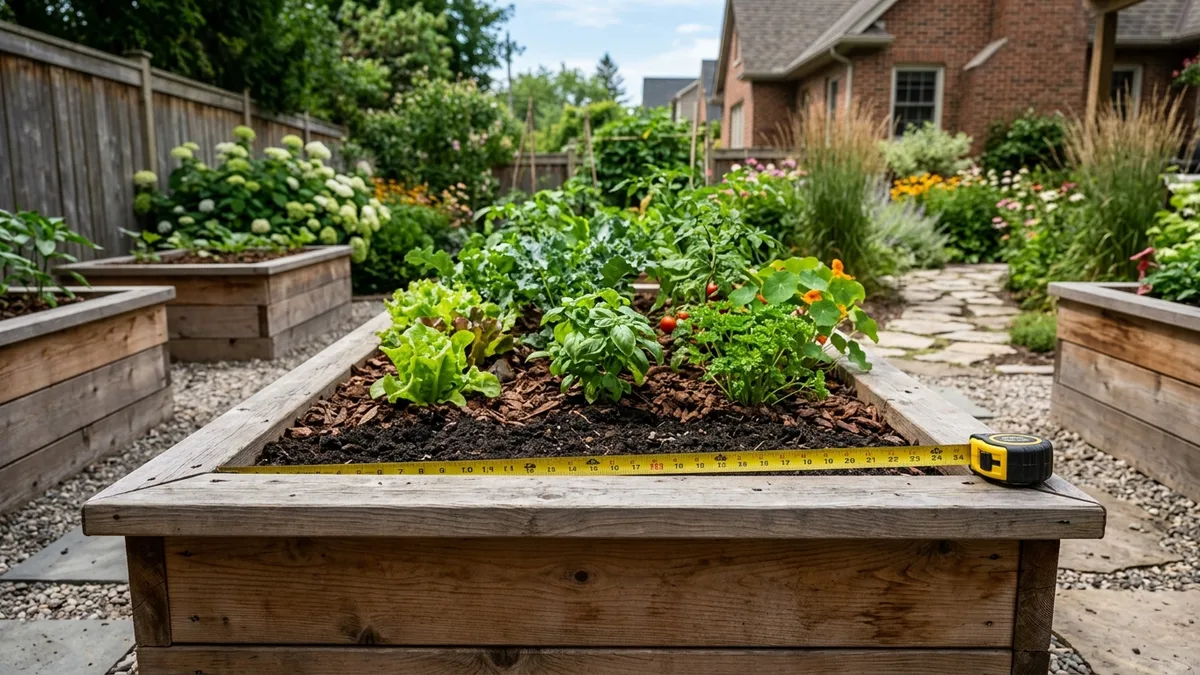
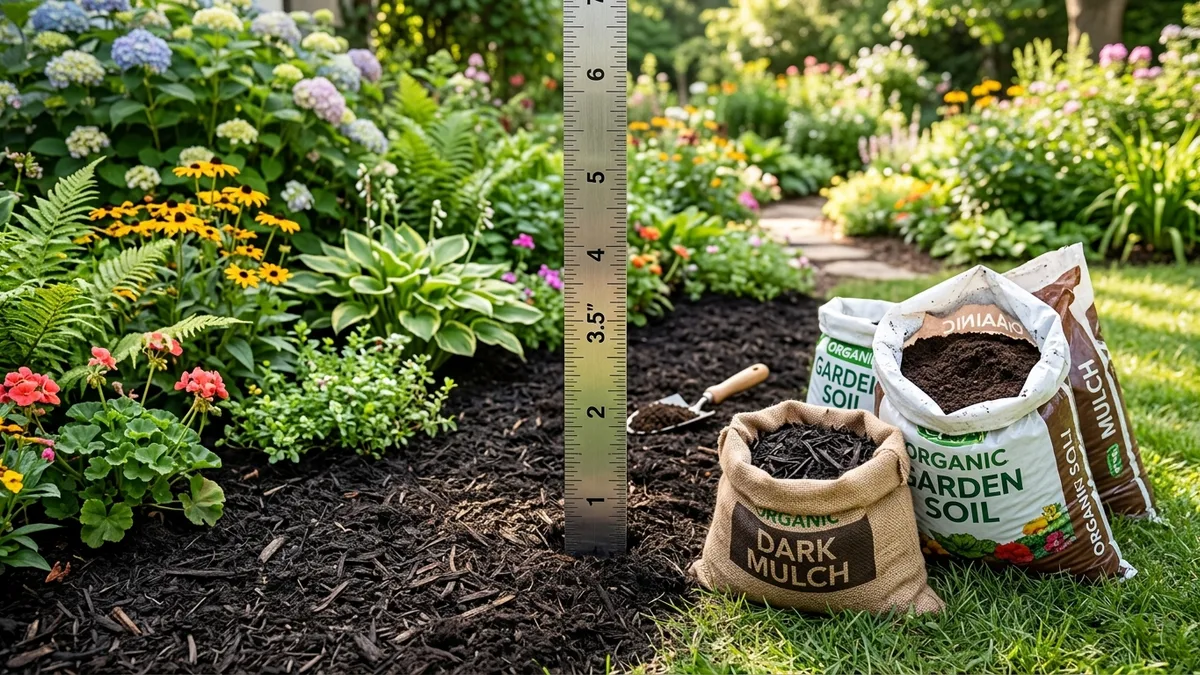
Raised cedar garden bed with rich organic soil and mulch measured with a yellow tape measure
Table of Contents (28 sections) ▼
- Quick Answer: Multiply Area by the Third Dimension
- Why Square Footage Needs a Height or Depth
- How to Use a Square Feet to Cubic Feet Calculator
- The Square Feet to Cubic Feet Formula
- When the depth is already in feet
- When the depth is in inches
- When the measurement includes feet and inches
- How to Calculate Cubic Feet From Square Feet and Depth
- Soil for a raised planting bed
- Mulch across separate planting areas
- Concrete slab volume
- How to calculate room volume from floor area
- Depth Comparison Table for Common Areas
- Turn the Result Into Cubic Yards or Bags
- Bulk orders in cubic yards
- Bags labeled by volume
- Concrete bags labeled by weight
- Handle Changing Depths and Irregular Footprints
- Separate Measured Volume From Ordering Assumptions
- Work Backward to Find Coverage or Depth
- Questions About Area, Depth, and Material Coverage
- Can you convert square feet to cubic feet without height?
- How many cubic feet is 100 square feet at 4 inches deep?
- How much soil do I need for 200 square feet?
- How many square feet does 2 cubic feet cover?
- Does this calculation work for a round garden bed?
- Why is my result twelve times too large?
- Measure the Missing Dimension Before Ordering
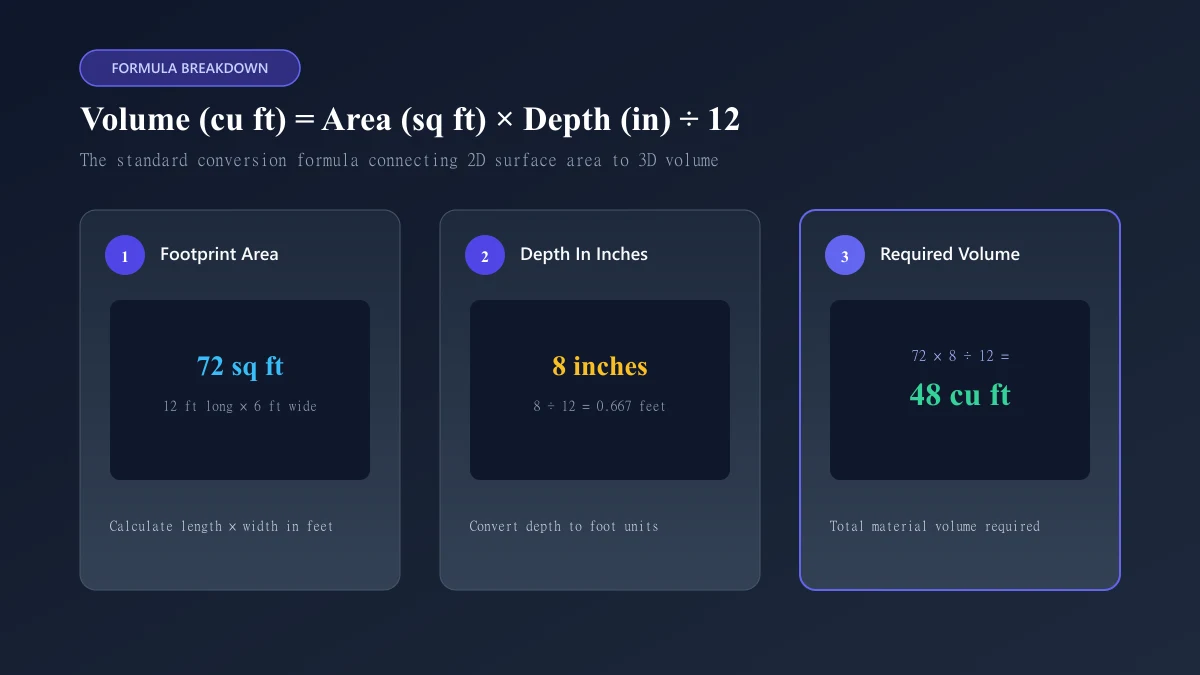
A square feet to cubic feet calculator finds volume by multiplying an area by its height or depth in feet. If the depth is measured in inches, divide it by 12 first. For example, a 72-square-foot planting bed filled 8 inches deep needs 48 cubic feet of material before any allowance for settling or handling losses.
The extra measurement matters. A floor, garden bed, or slab outline tells you how much surface you have, but it does not tell you how much space sits above or below that surface. A shallow layer and a deep fill can share the same footprint while requiring very different quantities.
Below, you will find the formulas, input instructions, depth comparisons, and practical examples needed to make the calculation useful. You will also learn how to turn the result into bags or cubic yards and handle areas where the depth changes.
Quick Answer: Multiply Area by the Third Dimension
To convert square feet to cubic feet, multiply the area in square feet by a uniform height or depth in feet. When depth is in inches, use area × depth ÷ 12. Square footage alone is insufficient because area measures a surface, while volume includes a third dimension.
This works for a layer with a consistent thickness or a space with a constant cross-sectional area along its height.
Why Square Footage Needs a Height or Depth
A square foot describes a surface measuring one foot by one foot. A cubic foot describes the volume of a cube measuring one foot in each direction.
The difference becomes clear with a storage space. A footprint of 24 square feet could hold 48 cubic feet if it is 2 feet high, or 144 cubic feet if it is 6 feet high. The floor area has stayed the same; the usable height has changed.
That is why there is no single conversion factor between these units. The missing dimension supplies the relationship.
You will usually call that dimension:
- Depth when filling a garden bed or spreading material.
- Thickness when calculating a slab or layer.
- Height when measuring a room, container, or storage space.
The words describe different uses of the same mathematical role. Measure the distance perpendicular to the base area. For a box with straight sides, that is the vertical distance from its inside bottom to the intended fill line.
How to Use a Square Feet to Cubic Feet Calculator
Start with the measurements your project actually requires. An area to volume calculator can perform the arithmetic, but the inputs determine whether the result represents the space you intend to fill.
- Find the area. Enter an existing square-foot measurement, or multiply length by width for a rectangle.
- Measure the third dimension. Use the intended fill depth, layer thickness, or internal height.
- Select the correct unit. A value of 4 inches is very different from 4 feet.
- Calculate the volume. Read the result in cubic feet, commonly written as ft³ or cu ft.
- Review the assumptions. Check whether the area has a uniform depth and whether solid objects occupy part of it.
For a rectangular bed measuring 9 feet by 4 feet with a 10-inch fill depth, enter 36 square feet and 10 inches. The result is 30 cubic feet.
Use internal dimensions when calculating container capacity. Outside measurements include the walls and can overstate the space available. If the bed already contains soil, measure the additional depth needed rather than its full height.
The Square Feet to Cubic Feet Formula
The basic relationship is:
Here, V is volume in cubic feet, A is area in square feet, and d is depth or height in feet.
When the depth is already in feet
Suppose a rectangular enclosure has a base area of 84 square feet and an internal height of 2.5 feet:
No additional unit conversion is needed. The units explain the result: ft² multiplied by ft becomes ft³. This check is called dimensional analysis.
When the depth is in inches
Because one foot contains 12 inches:
For 156 square feet covered to a depth of 5 inches:
Keep the fraction intact during the calculation. Using 5 ÷ 12 directly avoids the error introduced by rounding the thickness in feet before multiplying.
When the measurement includes feet and inches
Convert the inch portion and add it to the feet. A height of 7 feet 9 inches becomes:
Do not enter 7.9 feet. Decimal feet and feet-and-inches notation are different measurements.
How to Calculate Cubic Feet From Square Feet and Depth
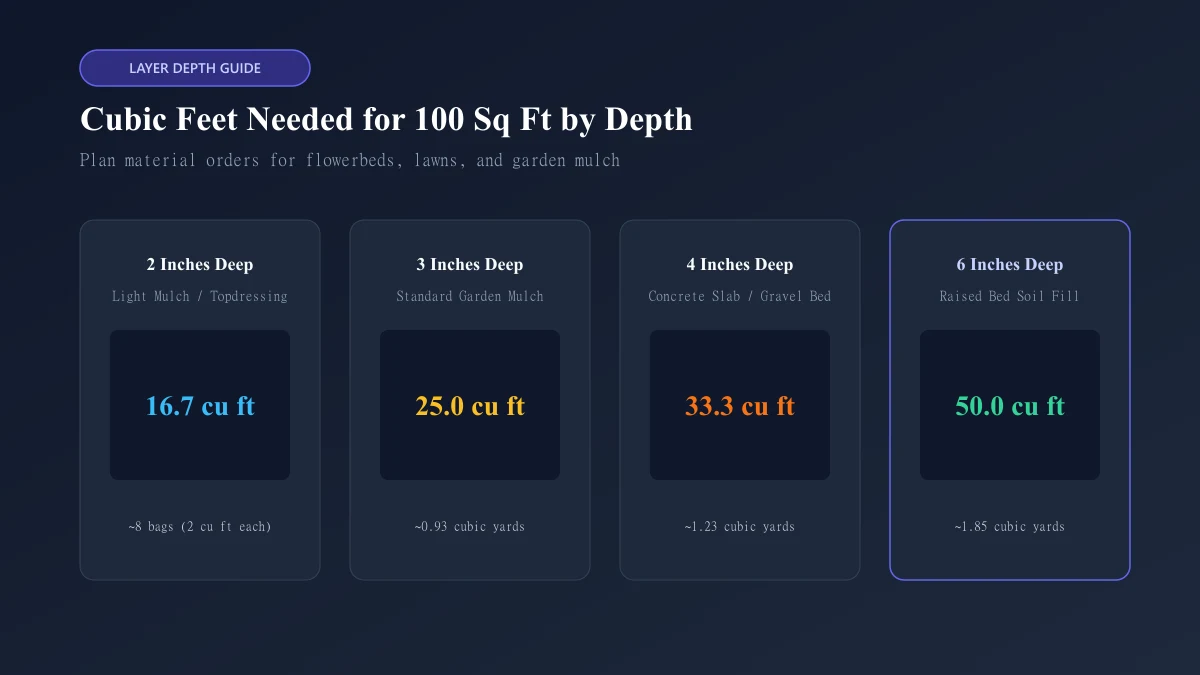
The following examples use the same formula for different tasks. All depths are assumed measurements for demonstration, not installation specifications.
Soil for a raised planting bed
A bed has an internal length of 11 feet and width of 3 feet. It needs another 8 inches of soil to reach the intended fill line.
First calculate its surface area:
Then calculate the additional soil volume:
If each bag contains 2 cubic feet, the calculated amount equals 11 bags before any project-specific allowance. This estimate assumes the bed has straight sides and an even existing soil level.
Mulch across separate planting areas
Two beds cover 54 and 66 square feet. Both will receive a 2.5-inch layer.
Because their depths match, add the areas first:
This gives the mulch coverage requirement by volume. Subtract any paths or other areas that will remain uncovered before calculating.
Concrete slab volume
Assume a project specifies a 14-foot by 9-foot slab with a uniform thickness of 4 inches:
This is the geometric slab volume. Thickened edges, footings, and other deeper sections need separate calculations. A volume calculation does not determine the appropriate structural thickness or reinforcement.
How to calculate room volume from floor area
A rectangular room has a floor area of 175 square feet and a flat ceiling 8 feet high:
This describes the enclosed geometric space before subtracting objects. Sloped ceilings or changing floor levels require a more detailed shape calculation.
Depth Comparison Table for Common Areas
Use this table to compare how cubic footage changes with depth. Values are rounded to two decimal places where needed.
| Uniform depth | 50 ft² area | 100 ft² area | 250 ft² area |
|---|---|---|---|
| 1 inch | 4.17 ft³ | 8.33 ft³ | 20.83 ft³ |
| 2 inches | 8.33 ft³ | 16.67 ft³ | 41.67 ft³ |
| 3 inches | 12.50 ft³ | 25 ft³ | 62.50 ft³ |
| 4 inches | 16.67 ft³ | 33.33 ft³ | 83.33 ft³ |
| 6 inches | 25 ft³ | 50 ft³ | 125 ft³ |
| 12 inches | 50 ft³ | 100 ft³ | 250 ft³ |
These are volume relationships, not recommendations for mulch depth or slab thickness. Select the depth your project calls for, then use the appropriate row.
Notice that doubling the depth doubles the required volume. An apparently small measurement difference can therefore matter across a large area. Over 600 square feet, an extra half-inch adds 25 cubic feet to the total.
Turn the Result Into Cubic Yards or Bags
Material suppliers may sell the same product by bags or bulk volume. Convert the calculated quantity into the units used on the product label or quotation.
Bulk orders in cubic yards
A cubic yard contains 27 cubic feet, so:
For the 42-cubic-foot slab example:
42 ÷ 27 ≈ 1.56 cubic yards
Ask the supplier about ordering increments and any project-specific allowance. Keep the measured volume separate from extra material added for handling or site conditions.
Bags labeled by volume
Divide the volume needed by the volume in each bag:
If you need 29 cubic feet and the bags contain 1.5 cubic feet each:
29 ÷ 1.5 ≈ 19.33 bags
You would purchase at least 20 whole bags to meet that calculated quantity. Rounding downward would leave a shortfall.
Concrete bags labeled by weight
For bagged concrete, use the manufacturer’s mixed concrete yield. Bag weight alone does not state how much finished volume the product produces.
If a particular bag’s label specifies a yield of 0.60 cubic feet, a 42-cubic-foot requirement works out to 70 bags before an allowance. Use the actual product’s stated yield rather than assuming every concrete mix has the same value.
Handle Changing Depths and Irregular Footprints
Not every project forms a neat rectangular block. When converting square footage to cubic feet for an uneven area, divide the project into sections that you can measure reliably.
For an L-shaped footprint, calculate two non-overlapping rectangles. Add their areas if the depth is the same throughout. If the depths differ, calculate each section’s volume separately.
Consider a fill area with these measurements:
| Section | Area | Depth | Volume |
|---|---|---|---|
| A | 80 ft² | 3 inches | 20 ft³ |
| B | 40 ft² | 9 inches | 30 ft³ |
| Total | 120 ft² | Varies | 50 ft³ |
Simply averaging 3 and 9 inches would give 6 inches, producing an incorrect total of 60 cubic feet. The deeper section covers less area, so it must have less influence on the average.
The area-weighted average depth here is 5 inches. Calculating the sections individually is often easier to follow and check.
For smoothly changing ground levels, use enough measurements to represent the surface. A simple average of two endpoint depths is suitable only when the geometry supports it, such as a rectangular area with depth changing evenly in one direction.
Separate Measured Volume From Ordering Assumptions
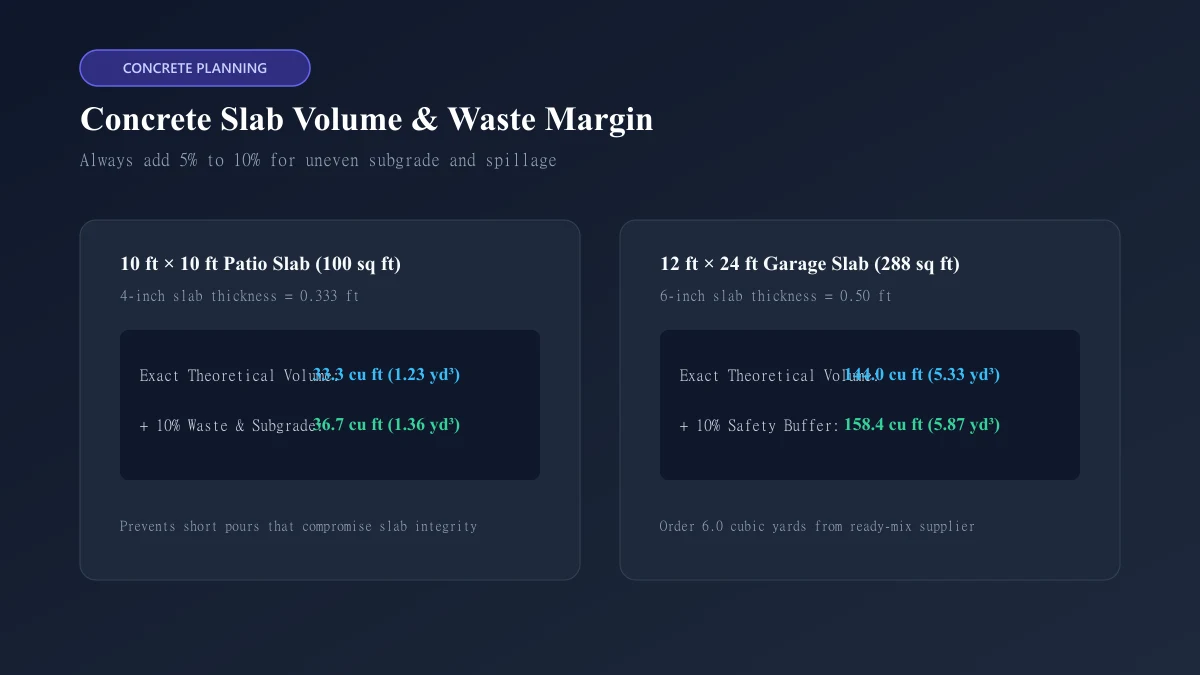
A sq ft to cubic ft calculator returns a volume based on your dimensions. It cannot know how a loose material will settle, how uneven the excavation is, or how much material will be lost during placement.
Keep three quantities clear:
- Net volume: The space calculated from the measurements.
- Adjusted requirement: Net volume plus a justified project allowance or material adjustment.
- Purchase quantity: The adjusted requirement expressed in available bags or delivery increments.
Compaction matters when a supplier quotes loose material but your required depth describes its compacted condition. Ask for product-specific guidance; there is no single multiplier suitable for every soil or aggregate.
Material density is needed if an order is priced by weight. Equal volumes of mulch and gravel do not have equal weights. Moisture and product composition can also affect the weight estimate.
Avoid treating extra decimal places as proof of accuracy. A result of 47.826 cubic feet may be mathematically precise for the entered numbers while the measurements themselves are approximate. Report a sensible rounded volume and retain more digits for intermediate calculations.
Work Backward to Find Coverage or Depth
Sometimes you already have the material and need to know how far it will spread. Rearrange the formula:
Or, with depth in inches:
Suppose you have 18 cubic feet of material and want a 3-inch layer:
If your available area is fixed instead, find the depth:
Spreading those 18 cubic feet across 96 square feet produces a calculated depth of 2.25 inches. Both answers assume even distribution and no change in material volume after placement.
Questions About Area, Depth, and Material Coverage
Can you convert square feet to cubic feet without height?
You need a height, depth, or thickness to obtain a definite volume. An area measurement provides only two dimensions. If the depth is unknown, you can compare several assumed depths, but label each assumption clearly. A calculator that silently selects a depth may produce an answer that does not fit your project.
How many cubic feet is 100 square feet at 4 inches deep?
The volume is approximately 33.33 cubic feet. Calculate 100 × 4 ÷ 12, because the 4-inch depth must be converted to feet. This assumes the entire 100-square-foot area has the same thickness. Deeper edges, empty spaces, or varying ground levels would change the quantity.
How much soil do I need for 200 square feet?
The amount depends on the additional soil depth. At 3 inches, you need 50 cubic feet; at 6 inches, you need 100 cubic feet. Measure how much soil must be added rather than using the full bed height if soil is already present. Ordering adjustments depend on the material and site.
How many square feet does 2 cubic feet cover?
Two cubic feet covers 24 square feet at 1 inch deep, 12 square feet at 2 inches, or 8 square feet at 3 inches. Use coverage = volume × 12 ÷ depth in inches. These figures assume a uniform layer and describe coverage before settling or compaction changes its volume.
Does this calculation work for a round garden bed?
Yes, if you first calculate the circular area and the bed has a uniform depth with vertical sides. Use area = π × radius², then multiply by depth in feet. For a container that narrows toward the bottom, using the top opening’s area for the entire depth will overestimate capacity.
Why is my result twelve times too large?
You may have multiplied square feet by a depth in inches without converting that depth to feet. For example, 30 square feet at 2 inches deep is 5 cubic feet, not 60. Divide the inch measurement by 12, or select inches in a calculator that handles the conversion automatically.
Measure the Missing Dimension Before Ordering
A square feet to cubic feet calculator is most useful when the area, depth, and units are clearly defined. Measure the space, calculate each section if necessary, and keep the resulting volume separate from allowances and purchase increments.
Before ordering, check the supplier’s units and product yield. That final check connects a correct calculation to the amount of material you can actually use.
Related Topics
Written by BigTechies Editorial Team
BigTechies develops accurate, practical calculation and unit conversion tools for contractors, designers, architects, and DIY homeowners. Every formula and reference guide is reviewed for dimensional consistency and mathematical precision.
Related Articles
Continue exploring practical measurement guides
 Volume & Area
How Many Sq Feet in a Cubic Foot? Coverage Depends on Depth
Find how many square feet one cubic foot covers at different depths. See a clear coverage chart, bag examples, and why area and volume have no fixed conversion.
 Unit Conversion
Converter Meter to Square Feet: Get the Right Area Conversion
Convert square meters to square feet with accurate formulas and examples. Learn when meter measurements need a width, plus tables, room calculations, and tips.
 Volume & Area
How Do I Find the Cubic Feet? A Practical Measuring Guide
Learn how to find cubic feet from feet, inches, or metric measurements. Get clear examples for boxes, rooms, cylinders, and spaces with uneven dimensions.
Calculate Your Project in Seconds
Whether you're pouring concrete, spreading garden mulch, or estimating freight container volume, our instant calculator provides exact answers with zero guesswork.